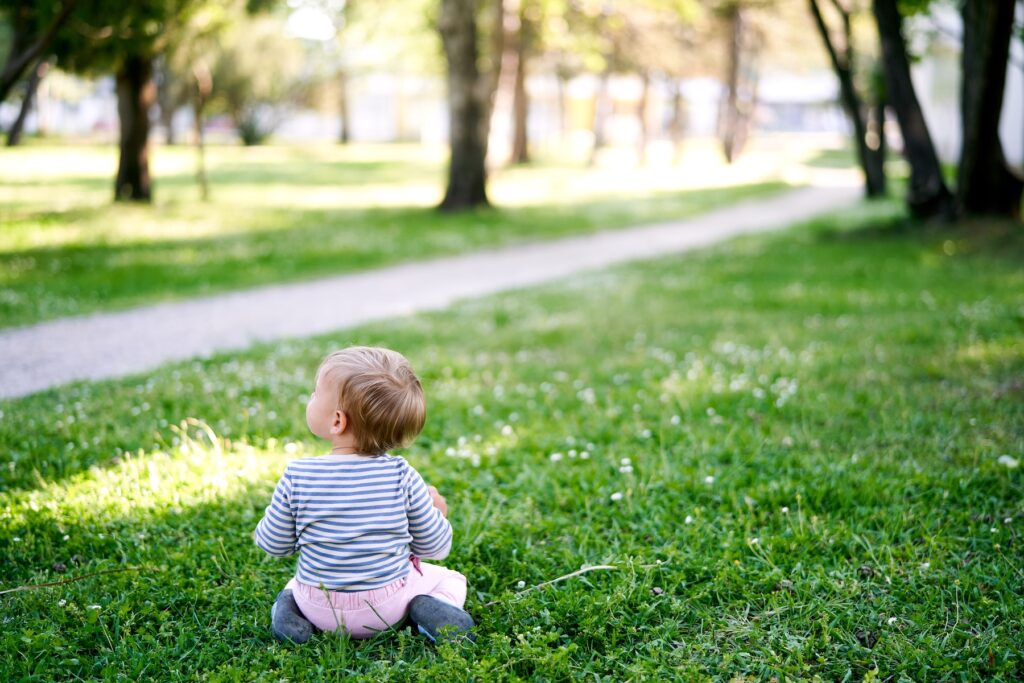
When I was at the park this week, I was reminded of something I think many parents do not think about.
There was a baby sitting in a car seat while her mother sat on a bench and read. Her toddler brother was climbing on the playground.
That is very normal. Most of us think about taking toddlers and older kids to the park. They need space to run, climb, swing, slide, and get their energy out.
But what about babies?
I like parks for babies too.
The experience is different, of course. A baby is not going to run across the grass or climb the ladder to the slide. But a park can still be a very helpful place for your baby’s development.
Here’s the simple idea:
A park visit does not have to be a “playground” visit for your baby. It can be a floor-time visit in a new place.
For young babies, that may mean tummy time on a blanket.
For older babies, it may mean rolling, reaching, crawling, or pulling to stand near the edge of the playground.
And for you, it may simply mean getting out of the house, breathing fresh air, and resetting the day.
Why I like park visits for babies
Sometimes you and your baby just need a change of scenery.
The house can start to feel small. The same toys, the same rooms, the same floor space, and the same routine can get old for both of you.
A walk to the park can help.
You can put your baby in a stroller, carrier, or wrap and head outside. Even before you “do” anything developmental, the walk itself gives your baby new things to see, hear, and feel.
The light is different.
The air is different.
The sounds are different.
That may seem simple, but simple experiences matter for babies.
Babies are constantly learning about the world through their bodies. What seems commonplace to us, may be a cherished first experience for our baby.
What do you do with a baby at the park?
Start with a blanket.
That is the easiest way to turn a park visit into something useful for your baby without making it complicated.
For a young baby, lay the blanket on a flat area of grass and place your baby on their tummy. Then lie down across from them and make faces, talk to them, sing, or simply let them look around.
You do not have to turn it into an exercise session.
You are just giving your baby a new place to be on their tummy.
That alone can be helpful.
Some babies who fuss with tummy time at home will tolerate it a little better outside because there is more to look at. The trees move. Other kids run by. Dogs bark. Leaves blow. The light changes.
There is a lot going on.
If your baby likes looking at faces, your face may be enough. If you want a little more help, bring a baby-safe mirror and set it in front of them. Many babies will spend extra time on their tummy when they can look at themselves.
And if you want a small break, you can sit nearby and read while they watch the mirror or look around.
For babies who are rolling
Once your baby is starting to roll, the park blanket becomes a little more interesting.
Bring a few toys your baby likes and place them just out of reach to the side.
This gives your baby a reason to turn, reach, and roll.
We often think of baby play as putting toys right in front of the baby. That is fine, but babies also need practice reaching to the side, turning their body, and moving toward something they want.
A blanket at the park gives them a nice little space to practice.
You can place a toy to one side and let your baby roll toward it. Then move the toy to the other side and let them roll back.
It does not need to be formal. You are simply using the park as a new place for the same good floor play your baby needs at home.
For babies who are crawling
Once your baby starts crawling, the park becomes even more interesting.
You can let your baby start on the blanket and then give them the space to move off the blanket and feel the grass.
This is where parents sometimes hesitate.
And I understand why.
Grass is pokey. The ground may be uneven. Your baby may try to eat leaves, dirt, or bark. You will need to watch them, of course.
But this is also part of how babies learn.
The floor at home is predictable. Grass is not. It feels different on their hands, knees, feet, and legs. It changes how they move. It gives them new sensory information.
These small experiences help your baby build a bigger understanding of the world.
For babies who are pulling to stand
As babies get closer to standing, they often become very interested in the playground equipment.
They see older kids climbing, stepping, sliding, and running. They want to be part of it.
This can be a great time to let your baby pull to stand at a safe, low part of the playground structure.
They might hold onto a step.
They might stand at the edge of a platform while you support them.
They might cruise along a low rail.
They might simply stand and watch the bigger kids play.
This is not about pushing your baby to be advanced. It is about letting them participate at their level.
A baby who is pulling to stand does not need to go down the slide or climb the structure. But they may love feeling like they are part of the playground.
That sense of participation matters too.
Babies are social. They watch other kids. They learn from what is happening around them. Sometimes the motivation to move comes from wanting to join in.
What about the baby swing?
Baby swings can be fun, and there is nothing wrong with using them when your baby is ready and well-supported.
But I would not make the swing the whole park visit.
The swing is still a container. Your baby is strapped in and supported by the seat. They may enjoy the movement, but they are not using their body in the same way they do when they are on the ground.
That is why I like the blanket and grass so much.
The bigger purpose of a park visit
For a toddler, the park is often about movement and energy.
They run. They climb. They slide. They swing. They come home tired.
For a baby, the purpose is different but still important.
A baby gets new tactile, visual, and movement experiences.
They feel grass, wind, sun, shade, and uneven ground.
They see trees, dogs, bikes, birds, and playground equipment.
They get inspired by older kids.
They hear new sounds.
They move their body in a new environment.
These experiences help your baby learn about the world around them.
And the more chances they have to explore safe, varied environments, the more they have to build on later.
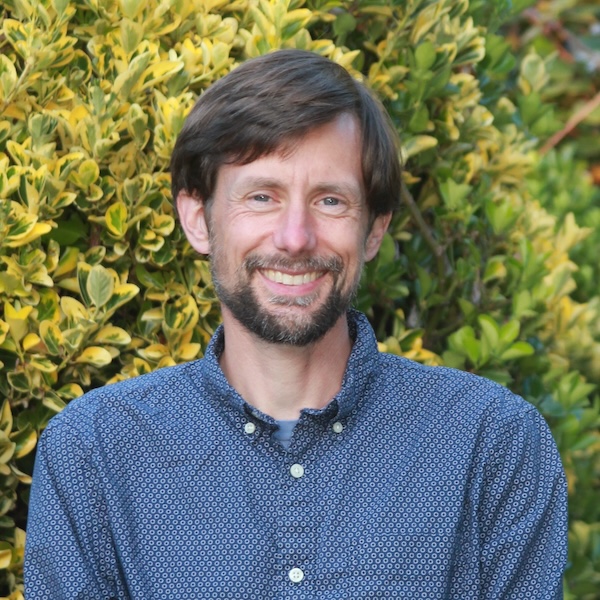
Dr. Trevor E. Carlson, PT, DPT
Pediatric physical therapist, author of Tummy Time to Walking, and founder of InfantPT.com.
I help parents better understand their baby’s movement and development with practical, calm, experience-based guidance.